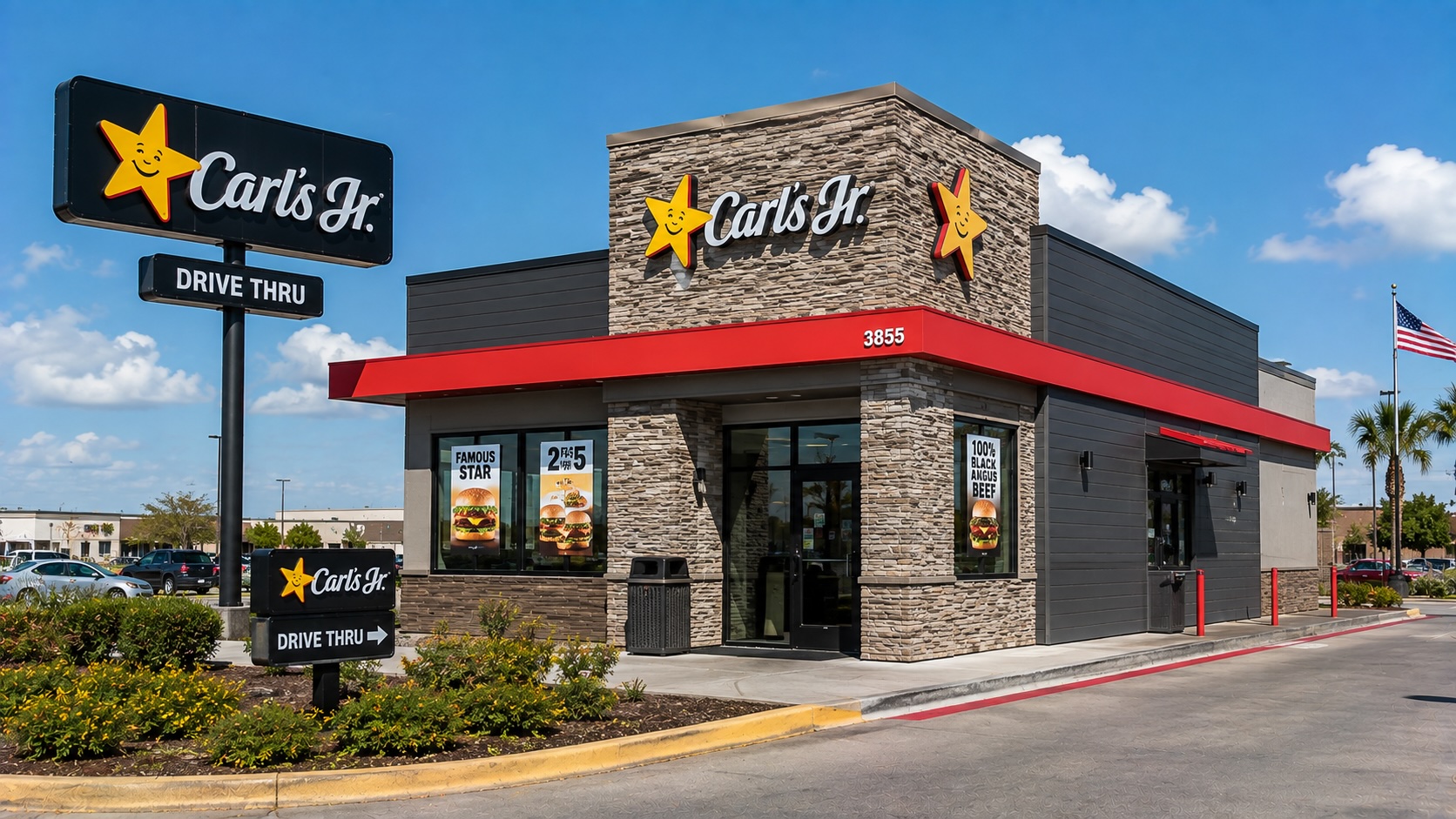
A West Coast burger brand where the franchisee is the credit, and how to pick a strong operator and a strong store, from a NNN buyer’s broker with 225+ transactions.
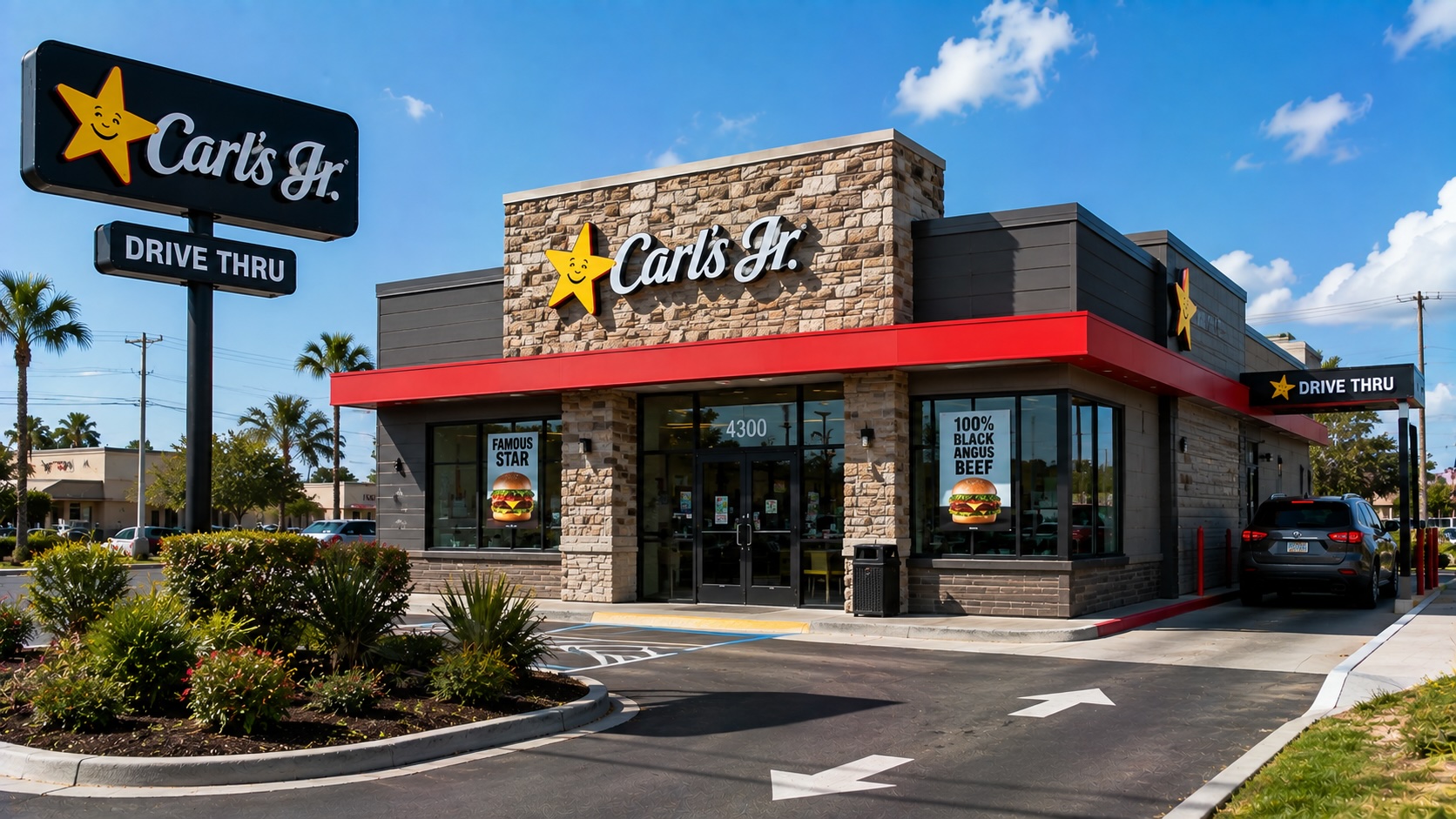
A Carl’s Jr. NNN property is a freestanding quick-service burger restaurant with a drive-thru, usually leased on an absolute NNN lease. Carl’s Jr. is owned by CKE Restaurant Holdings, also the parent of Hardee’s, which is owned by the private equity firm Roark Capital and based in Franklin, Tennessee. The brand has about 1,000 U.S. restaurants and about 1,700 worldwide, and roughly 97% are franchised.
That means most Carl’s Jr. leases are backed by a franchisee, not CKE. Operating costs have been a pressure point, especially in California: in April 2026, a 59-unit Carl’s Jr. franchisee filed Chapter 11, citing the state’s $20 fast-food minimum wage. So the operator and the individual store drive value in any Carl’s Jr. purchase on a 1031 exchange. Solid Investments FL helps buyers vet both, and our buyer representation is always free to you.
| Tenant | Usually a franchisee operating company, sometimes with a personal guarantee; corporate leases are rare. Confirm the tenant and every guarantor |
|---|---|
| Parent company | CKE Restaurant Holdings (private, owned by Roark Capital); Franklin, Tennessee |
| Parent credit | Private company, not publicly rated; CKE finances itself mainly through a securitization. Franchisee credit varies by operator |
| Restaurants | About 1,032 in the U.S. and 1,716 worldwide (2024 data), about 97% franchised |
| Recent trend | U.S. unit count down about 7.7% over five years, while average unit sales rose about 23% |
| Franchisee news | A 59-unit California franchisee filed Chapter 11 in April 2026; by June, 10 stores had closed and 49 were being sold |
| Building | Freestanding restaurant with a drive-thru; building and lot size vary by site |
| Lease type | Usually absolute NNN; fee-simple and ground-lease deals both trade |
| Lease term & increases | Varies by lease; check the remaining term and the bump schedule |
| Typical cap rate (2026) | About 6.25%–7.5%, depending on the operator and the store |
| Typical price range | About $1.5M–$3.5M |
Restaurant counts from franchise-industry rankings and news reports as of 2026. Cap rates and pricing reflect current market conditions and vary by deal.
Nearly all Carl’s Jr. leases are guaranteed by a franchisee, not CKE. Read exactly who signs the lease and who guarantees it, including any personal guarantee.
Check how many units back the guarantee. Franchisees often hold restaurants in separate subsidiaries, so a large operator’s lease may be guaranteed by an entity with only a few stores.
The 2026 California franchisee bankruptcy is a reminder to ask for the operator’s financials and check for defaults, closures or bankruptcies across its stores.
Ask for store-level sales. Rent at 6%–8% of sales is healthy, below 6% is very strong, and around 10% is close to break-even.
Compare the rent per square foot to what similar restaurants lease for nearby. Rent at or below market makes the site easier to re-lease if the operator ever fails.
Labor costs vary a lot by state. California’s fast-food minimum wage has squeezed some operators, so weigh the state and local cost picture along with the real estate.
We’ve represented buyers on Carl’s Jr. deals in Beaumont and Houston, Texas:
Fast Food / QSR
Fast Food / QSR
Solid Investments FL is a NNN buyer's brokerage based in Lakewood Ranch (Sarasota), FL, with 225+ NNN transactions, including Carl's Jr. deals in Texas. We help investors and 1031 exchange buyers find, underwrite and close Carl's Jr. and other quick-service restaurant properties nationwide, and our buyer representation is free.
As of 2026, Carl's Jr. NNN properties generally trade around 6.25% to 7.5% cap rates. Strong multi-unit operators, long remaining terms and good locations trade at the lower end, while smaller operators and shorter terms trade higher.
Then you own the land and the tenant owns the building. The main drawback is that you can't depreciate the building. The upsides: the tenant paid to build the store, so it has a strong vested interest in staying; ground rents are typically at or below market; and in most ground leases the building reverts to the landowner when the tenant vacates or the lease ends (verify it in your lease). That's why ground leases usually trade at lower cap rates.
Carl's Jr. is owned by CKE Restaurant Holdings, which also owns Hardee's. CKE is a private company owned by the private equity firm Roark Capital and is based in Franklin, Tennessee.
CKE is private and not publicly rated as a company. Because about 97% of Carl's Jr. restaurants are franchised, the lease is usually backed by a franchisee, and its strength has to be judged from its size, financials and track record.
Some. The U.S. store count has drifted down over the past five years, and in April 2026 a 59-unit California franchisee filed Chapter 11, citing higher labor costs. By June 2026, 10 of those stores had closed and 49 were being sold. Store sales and operator strength are the best protection.
Start with how many restaurants actually back the guarantee, since franchisees often hold stores in separate subsidiaries. Next, compare rent to store sales: rent at 6% to 8% of sales is healthy, below 6% is very strong, and around 10% is close to break-even for many operators. Finally, check rent per square foot against the local market.
General information only, not investment, tax or legal advice. Credit ratings and market data change; verify current figures before investing.
We’ll help you find a strong operator and read the lease. Tell us your budget and timeline; our buyer representation is completely free.
📞 954-296-6955 | 11015 Gatewood Dr Suite 102, Lakewood Ranch, FL 34211