Higher-yield discount retail under new private ownership, and what to check before you buy, from a buyer’s broker who has closed Family Dollar deals in Missouri and Tennessee.
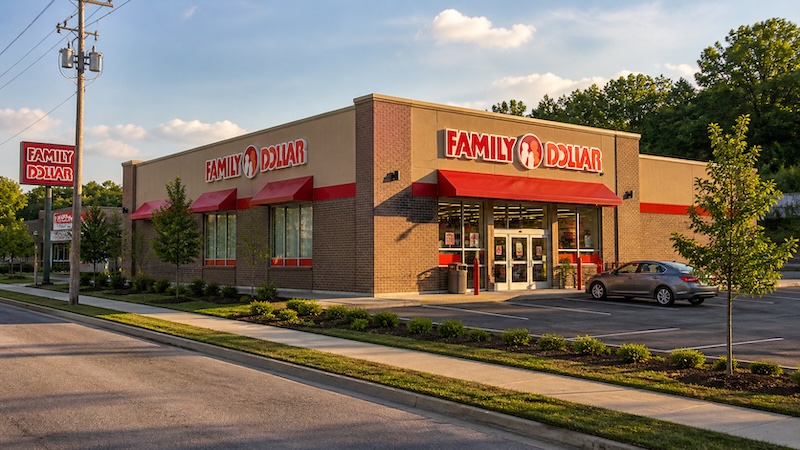
A Family Dollar NNN property is a freestanding neighborhood discount store, typically about 8,000 to 9,000 square feet, leased to a Family Dollar operating company on a net lease of about 10 years. Family Dollar has more than 7,000 U.S. stores, many in urban and lower-income neighborhoods that other retailers don’t serve. In July 2025, Dollar Tree sold Family Dollar for $1 billion to a holding company formed by private investment firms Brigade Capital and Macellum Capital. That means Family Dollar is now a private company with no public credit rating, and it has been closing underperforming stores. Family Dollar properties trade at higher cap rates than Dollar General for that reason, so store-level performance and the real estate matter more here than on most corporate net lease deals, especially on a 1031 exchange.
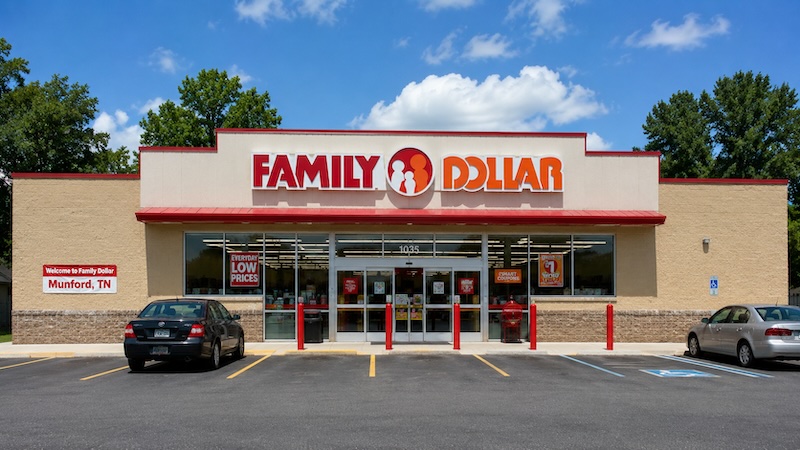
Solid Investments FL has represented buyers on Family Dollar transactions, including a rare absolute NNN corporate store three miles from downtown Kansas City, Missouri in 2021 and a corporate store in Munford, Tennessee. See them in our track record. Our buyer representation is always free to you.
| Tenant | A Family Dollar operating entity; confirm the tenant and any guarantor on each lease |
|---|---|
| Ownership | Privately owned since July 2025 by a holding company formed by Brigade Capital and Macellum Capital; previously part of Dollar Tree |
| Credit rating | Private, no public rating |
| Stores | About 7,000+ in the U.S.; at least 350 closed in the first 10 months under new ownership |
| Typical lease term | About 10 years, with multiple 5-year options |
| Lease type | NNN or absolute NNN; check roof, structure and parking lot on older leases |
| Rent increases | Typically 10% every 5 years on newer leases; older leases vary |
| Typical cap rate (2026) | About 5.5%–7.0%, depending on lease term, location and store performance |
| Typical price range | About $1M–$3.5M+, with primary-market locations at the high end |
| Typical building | About 8,000–9,000 SF on roughly an acre |
Ownership and store counts as of October 2026. Cap rates and pricing reflect current market conditions and vary by deal.
Since the July 2025 sale, Family Dollar has had no public parent and no credit rating. Read exactly who signs the lease and whether any guarantee from the old corporate structure still applies. Don’t assume Dollar Tree stands behind it.
Family Dollar has been closing stores for years, including at least 350 in the 10 months after the sale. Ask for store-level sales where possible, and favor stores in dense trade areas with solid traffic.
With a 10-year base term, the remaining term drives value. A store with only a few years left trades at a much higher cap rate, and renewal depends on how that store performs.
Read whether the lease lets Family Dollar terminate early or close the store (“go dark”) while still paying rent. With the chain closing stores, a lease that keeps paying through the full term is worth far more than one with an early exit.
Some Family Dollar leases leave the roof, structure or parking lot to the landlord. Get a property condition report and price any landlord responsibilities into your offer.
Many Family Dollars sit in dense urban neighborhoods with high populations nearby. Strong demographics and visibility make the real estate easier to re-lease, which is your real protection.
Family Dollars are typically sold fee simple, so you own the building and site improvements, and they are depreciable. The building is depreciated over 39 years, and a cost segregation study can move parts of the property, like the parking lot, lighting and signage, into shorter 5-, 7- or 15-year lives to accelerate deductions.
Because you own the building and improvements, there is real depreciable basis working for you every year, which can shelter much of the rental income.
Family Dollar’s higher cap rates combined with depreciation can make the after-tax return stronger than the headline cap rate suggests.
A cost segregation study is a modest one-time cost. Your CPA can estimate the first-year benefit on a specific store before you commit.
1031 exchange buyers: how much of your basis is eligible depends on how your exchange is structured. Depreciation recapture applies when you sell, passive-activity rules can limit who benefits, and state conformity varies. This is general information, not tax advice — confirm with your CPA and a cost segregation specialist before you buy.
We’ve represented buyers on Family Dollar properties, including these corporate stores:
Dollar Store
Dollar Store
Solid Investments FL is a NNN buyer's brokerage based in Lakewood Ranch (Sarasota), FL, that has represented buyers on Family Dollar transactions in Missouri and Tennessee. We help investors and 1031 exchange buyers find, underwrite and close Family Dollar and other dollar store properties nationwide, and our buyer representation is free.
In July 2025, Dollar Tree sold Family Dollar for $1 billion to a holding company formed by private investment firms Brigade Capital and Macellum Capital. Family Dollar is now privately owned and no longer part of Dollar Tree.
Family Dollar is privately owned and has no public credit rating. Investors underwrite the lease, the store's performance and the real estate rather than an agency rating, and should confirm exactly who signs and guarantees each lease.
As of 2026, Family Dollar properties generally trade between about 5.5% and 7.0% cap rates, higher than Dollar General, depending on remaining lease term, location and store performance.
Yes. Family Dollar has closed hundreds of stores in recent years, including at least 350 in the first 10 months after its July 2025 sale. Strong store sales and good real estate are the best protection.
It can be for investors who want higher yield at a smaller price point, typically $1 million to $3.5 million or more in primary markets. The trade-off is weaker credit and shorter leases than Dollar General, so the store's performance, the lease terms and the real estate need careful review.
Usually, yes. Family Dollars are typically sold fee simple, so you own the building and site improvements, which can be depreciated, and a cost segregation study can accelerate part of that. Confirm with your CPA.
General information only, not investment, tax or legal advice. Credit ratings and market data change; verify current figures before investing.
We’ve closed Family Dollar deals and know how to vet the store and the real estate. Tell us your budget and timeline; our buyer representation is completely free.
📞 954-296-6955 | 11015 Gatewood Dr Suite 102, Lakewood Ranch, FL 34211